
Since November 2025
How Emira got here.
Shipped work, not a plan. Out of hundreds of changes these are the ones that changed what the app is for, grouped by the problem being solved at the time. For what changed in a specific version, the release notes go version by version.
Late 2025
Building the obvious version, then living with it.
A food journal, built the ordinary way
Meals, a daily total, a calendar, some statistics. Nothing here was new, and that was fine: the point was to have something worth opening every day.
Almost everything that followed came out of using it and noticing where it got annoying.
Early 2026
Teaching it to understand a meal instead of making you find one.
Logging became a conversation
Searching a database and picking the least wrong row is the part everybody hates. So that went away. You describe the meal and Emira works it out, with photos and barcodes feeding the same flow.
Product data from Open Food Facts arrived at the same time, which is the moment packaged food stopped being guesswork.
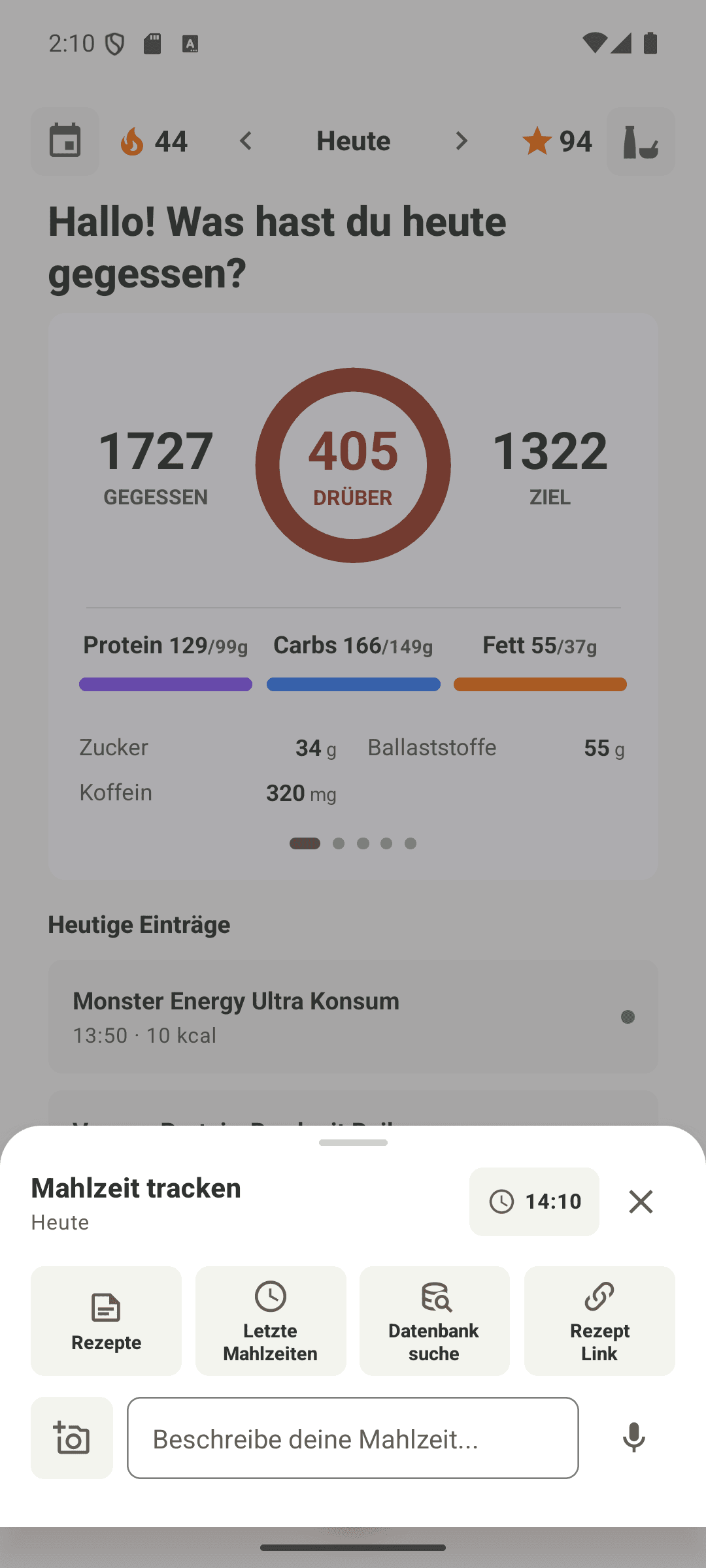
One entry point for every way of describing a meal. Fewer confidently wrong answers
The worst failure was never an obvious mistake. It was a plausible one: the right kind of food, the wrong product, a number you had no reason to question.
Semantic search and remembered preferences cut into that, and results started carrying titles so a day could be read at a glance.
Spring 2026
Looking things up instead of estimating around the gap.
It started reading instead of guessing
For products no database had, Emira began searching the web for a real nutrition table. Estimates stayed, but they had to say they were estimates.
Recipes became reusable, and corrections moved next to the result rather than into a separate screen.
Goals that follow the day you actually had
A fixed daily number assumes every day is the same. Dynamic goals read what you actually burned and subtract your deficit, so a long walk changes the target without you touching anything.
The nutrients on screen became yours to pick, and camera, voice and swipe shortcuts cut the distance between deciding to log and being done.
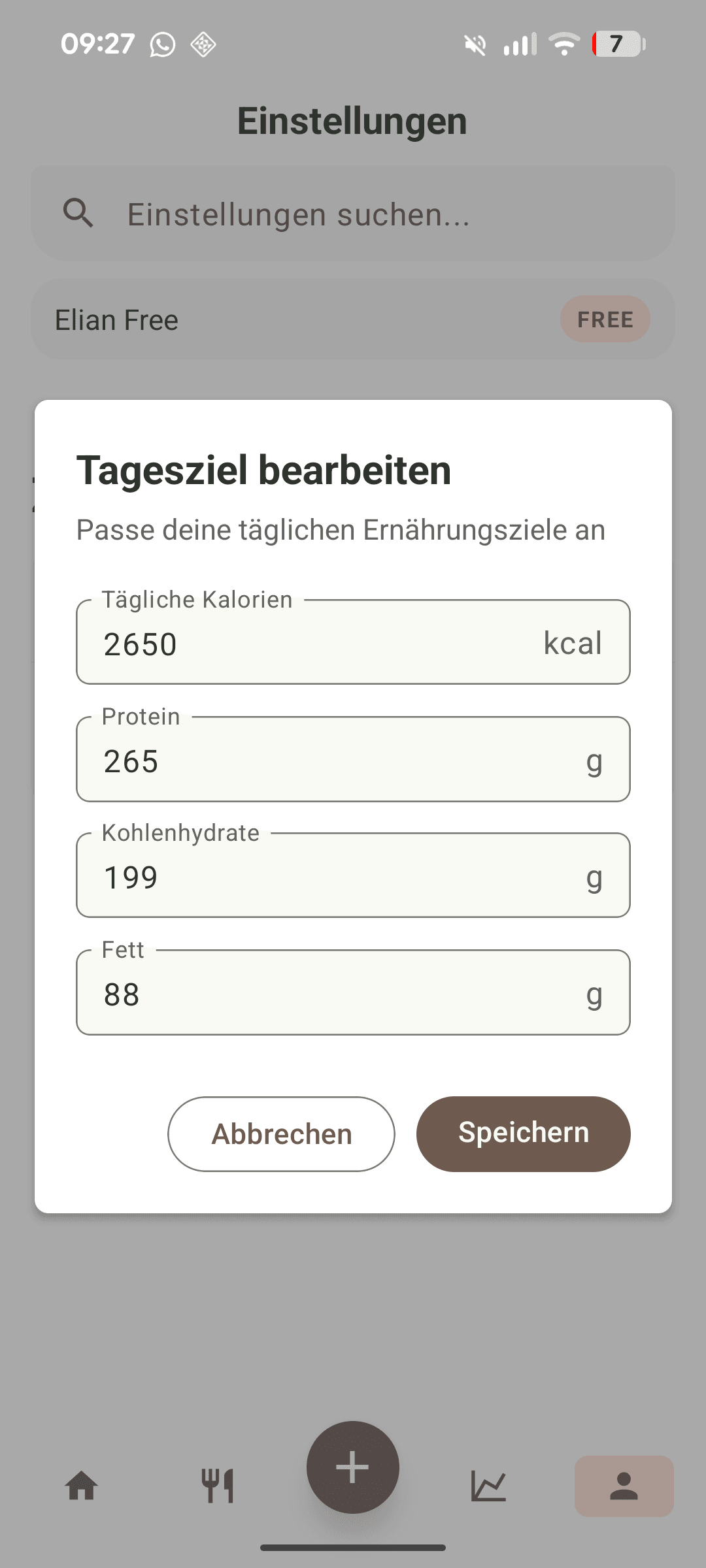
Fixed or derived from Health Connect. Editable either way. Reuse instead of retype
Most meals are repeats. Recent meals, photos and recipes moved to the front, recipe links became importable, and a meal someone shared with you could be picked up and edited as your own.
Summer 2026
Learning your rhythm, and learning when to stop asking.
More context than calories
Mood, hunger and fullness joined the record, because a day is not fully described by its macros. A dedicated insights area started surfacing patterns without slowing down the daily loop.
Portion sizes got easier to pick, ingredient sources became editable, and the app stopped waiting on a sync before showing you your own data.
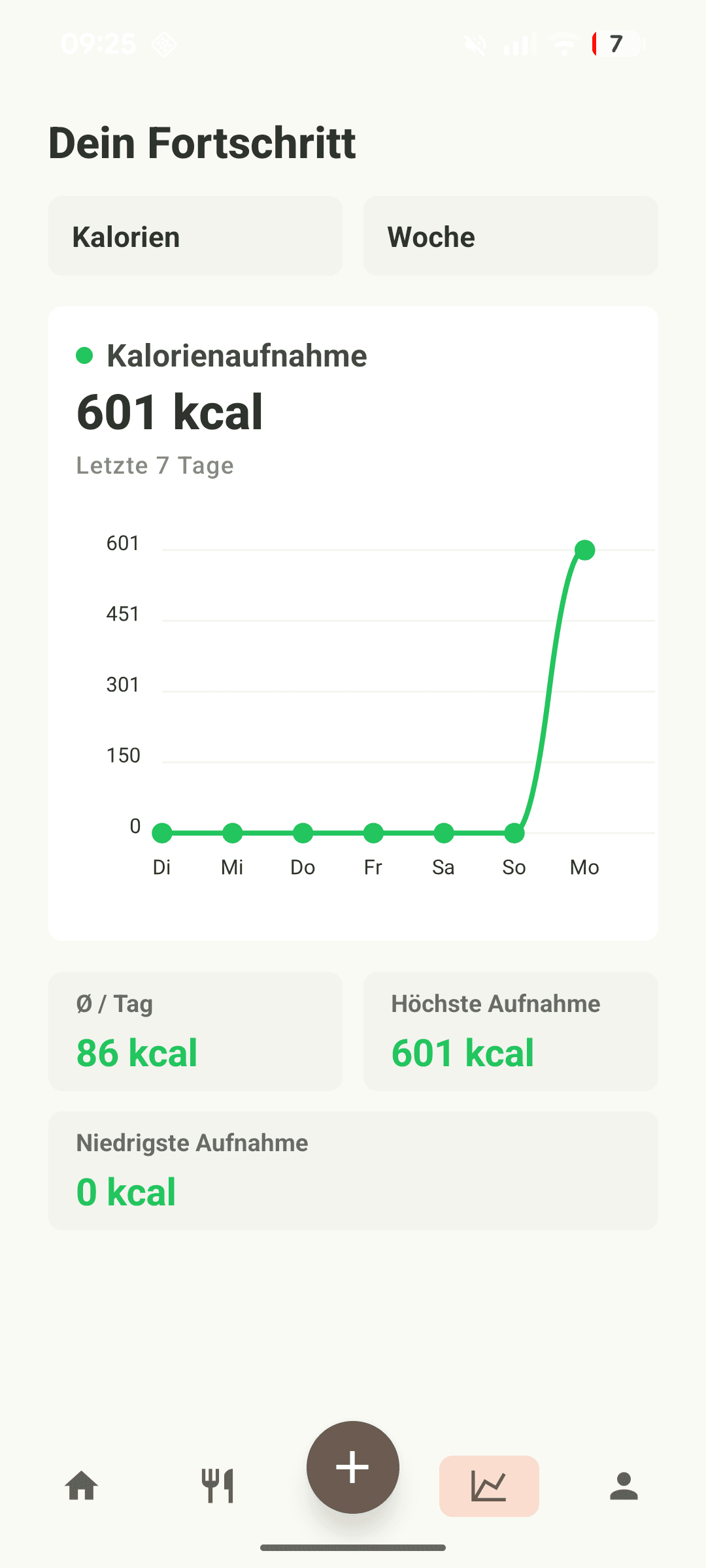
The view where a deficit is actually visible. Emira learned when you eat
Reminders stopped being fixed times you set once and forgot. They learn when you actually eat, per weekday, and open straight into logging.
Repeating yesterday's dinner became one tap, which turns out to cover a surprising share of an ordinary week.
Sensible defaults instead of an interrogation
Asking about every missing gram is a good way to make people stop logging. Meals now enter your day immediately with plausible amounts, and Emira offers exactly one optional refinement where the uncertainty would genuinely change the total.
What is not on this page
There is no future section. Everything above is running in the current build, and a roadmap of things that might happen would tell you nothing about whether the app is worth using today.
What the pattern does show is where the effort went: not into recognising food, which was working early, but into amounts, sources and knowing when to ask you. That is the same conclusion the accuracy page reaches from the measurement side, and the reason the way you log matters more than any single feature.