
History and insights
The part that only makes sense after a month.
A single day tells you almost nothing. Body weight alone swings by more than a moderate deficit produces. Patterns need weeks. This is the part of Emira that reads the record back to you instead of asking you to remember it.
Three things worth knowing about your own data.
All of it is computed from what you logged. None of it is a model's opinion about your diet.
Which products actually carry your day
Not what you eat most often, but what contributes most. These are different questions, and the answer to the second one is regularly a surprise: a daily coffee with milk, or the oil in the pan.
Which meals left you full
If you rate fullness, Emira shows which products appeared in the meals you rated highest. It is an association across whole meals, and it is labelled as one rather than a causal claim about an ingredient.
The shape of a week
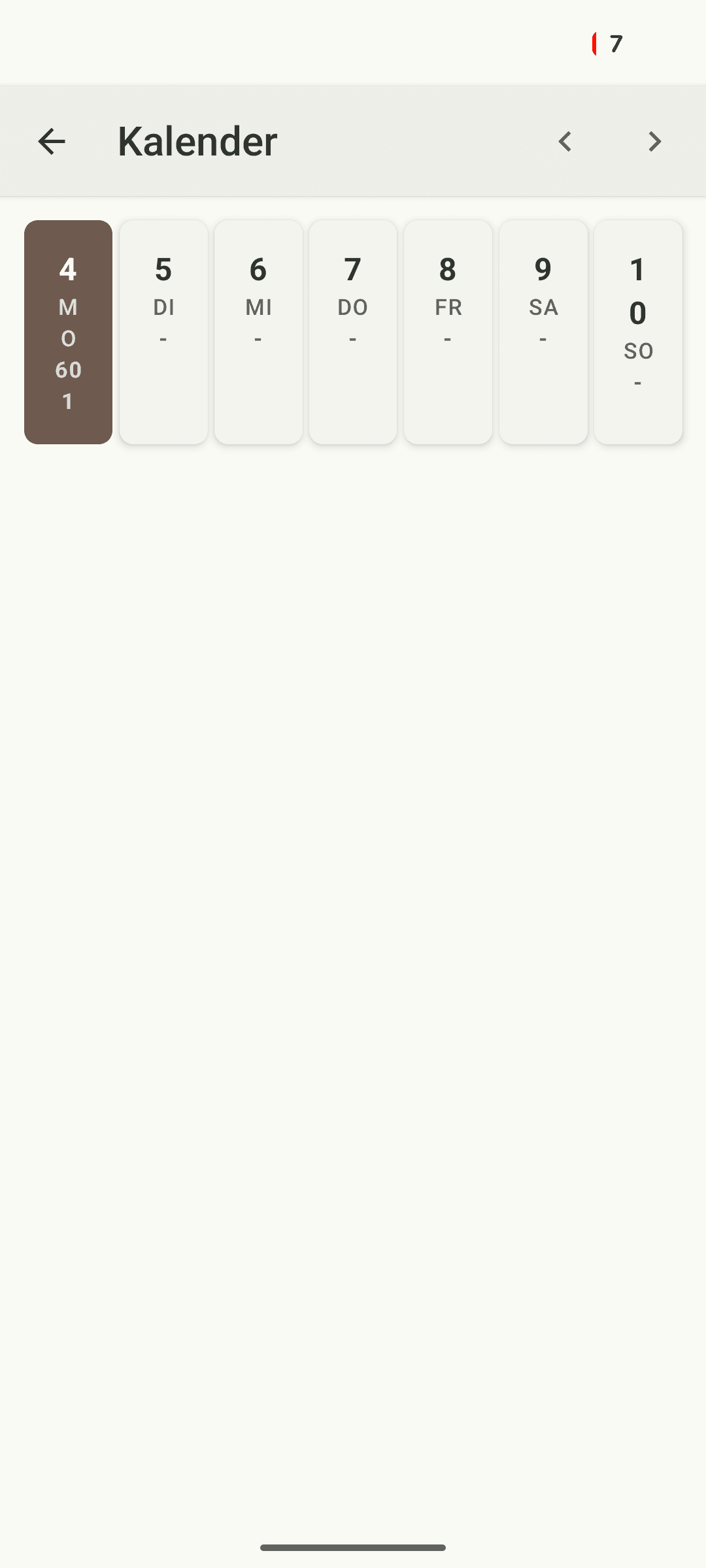
Trends over days and weeks, where a deficit is actually visible. A single day is noise; the point of the history is to stop treating it as signal.
Read-only on purpose
The review cannot edit, move or delete. That sounds like a missing feature and is actually a decision: a logged meal came out of a conversation with context attached, and editing it in a spreadsheet-style list would sever the two. Corrections go back through the conversation, where the reasoning still lives.
Days are shown as the sequence of entries you made, not bucketed into breakfast, lunch and dinner. Meal types exist as an optional label; they are not how the app organises your day, because that is not how most people actually eat.
For the background on why weekly trends beat daily readings, the blog has an informational piece on what a calorie deficit is, with sources.
Questions people ask
- Can I edit a past day from the history?
- No, and that is deliberate. The history is a place to look, not a place to rewrite. Changing a meal happens in the conversation that produced it, so the record and the reasoning stay attached to each other.Why corrections go through the conversation
- How is a product's contribution calculated?
- For each day you logged that product, Emira works out its share of that day's intake for a nutrient. The figure shown is the average of those daily shares across the days it appeared. Days without it are not counted, so an occasional product is not diluted into invisibility.How ingredient sources are recorded
- Does Emira tell me what to eat?
- No. Insights are a fixed set of observations drawn from your own logged data. No model decides what to show you, and nothing here is a recommendation.Read the sourced nutrition writing instead
- What is a satiety association?
- An observation about how often a product appeared in meals you rated as filling. It describes the whole meal, not the ingredient, so it is not evidence that one item caused anything, and it needs several rated meals before it means much at all.